Susan B. Anthony: Was a Pioneer Civil Rights Activist Leader and Her Political Activities

Young Life
Susan B. Anthony was born in February 15, 1820 to a Quaker family in West Grove (near Adams) New York. She was raised in that religion. She was the next to oldest of seven children. Her sister Mary Stafford Anthony became a teacher and a women’s rights activist, while her brother Daniel Reed Anthony became an editor and active in the Kansas anti-slavery movement.
Daniel, her father, was a cotton manufacturer and and abolitionist. He was stern but open minded and a member of the Quaker religion. No toys or amusements were allowed in the house on the basis that such things would distract the soul from the “inner light.” Her mother, Lucy, was less enthused about the Quaker religion Both parents enforced self-discipline; principled convictions and belief in one’s own self worth..
Susan learned to read and write at the age of three. When her family moved to Battenville, N>Y> when she was six years old a teacher at the local school refused to teach her long division because she was a girl. When her father heard about that he took her out of school and enrolled her in a group home school where he taught her himself. Another teacher, Mary Perkins, gave her a progressive image of womanhood.
. In August 1848 she attended the Rochester women’s rights convention, which was two weeks after a historic Seneca Falls Convention
Teaching
In 1837 she went to Deborah Moulson’s Female seminary, a Quaker boarding school in Philadelphia. Her education was cut short because her family was ruined financially by the panic of 1837.
Two years later the family moved to Hardscrabble, N.Y. Susan went to work as a teacher at Eunice Kenton’s Friends Seminary and later at the Canahane Academy in 1846. She became the headmistress of the female department. She helped to pay the family debts.
She quit teaching and went back to the family in Rochester where she became active in the temperance movement and started attending a Unitarian church. She drifted away from the
Quakers and later drifted somewhat away from organized religion and received criticism from Christian groups.
Social Activism
Susan became interested in abolition and temperance movements when she was 29 years old. She met lifetime partner in political activity Elizabeth Cady Stanton through her friend Amelia Bloomer. Elizabeth became the writer and idea contributor while Suzan’s energies went into traveling, giving lectures and organizing. She was the one in the public eye; who took the brunt of criticism and antagonism.
When she was young she was self conscious about her looks and her speaking abilities. Despite these misgivings she became a popular public figure and leader in the women’s movement.
Susan took an active and prominent role in the New York anti-slavery and temperance movements. In 1836 when, at age 16, she collected two boxes of petitions opposed to slavery in response to a gag rule that prohibited such petitions in the House of Representatives. At age 29 she became secretary for Daughters of Temperance. Which started her exposure to public attention.
In 1850 she read a detailed account of in the New York Tribune of the first women’s rights convention in Worcester, MA. Horace Greeley in this article wrote a very admiring description of the final speech given by Lucy Stone. That speech convinced Susan to devote her life to women’s rights. She met both Stone and Greeley in Seneca Falls in the summer of 1852.
With Cady Stanton she started the first state temperance society in America. They traveled the United states together giving speeches and persuaded the government that men and women should be treated alike. She and Mitilda Jocelyn Gage both made speeches for women’s rights at the National women’s rights Convention. After that She became prominent in Women’s rights.
In 1856 she tried to unite the African-American and women’s rights movement and became an agent for William Lloyd garrison’s American Anti-Slavery Society of New York. After the Civil War she was disappointed that those working for suffrage for Blacks seemed not concerned with the vote for women so she drifted away from that cause and concentrated on working for women’s suffrage.
Along with Stanton she started the National Women’s Suffrage Association (NWSA). She was vice-president of the organization until 1892 and then became its president.
She was active in national suffrage organizations but was criticized by the more radical women.
Link to article on Anthony and abortion
- Susan B. Anthony's Abortion Position Spurs Scuffle | Womens eNews
Susan B. Anthony died 100 years ago, but her position on abortion--what she did and didn't write, say or believe--is causing a live-action political tussle among historians, journalists and political activists.
Notes on sources:
Much information for this article was extracted from Wikipedia article on Susan B. Anthony. I have also used About.com Women’s History for information. On the abortion issue some information came from Women’s enews article “Susan B. Anthony’s Abortion Position Spurs Scuffle.”

The Revolution
The weekly publication The revolution started January 1, 1868. Its motto was ‘The true republic—men, their rights and nothing more; women, their rights and nothing less.” It was published to promote women’s suffrage and African-American rights. It also discussed issues like equal pay, for equal work, more liberal divorce laws and the church’s position on women’s rights.
Abortion
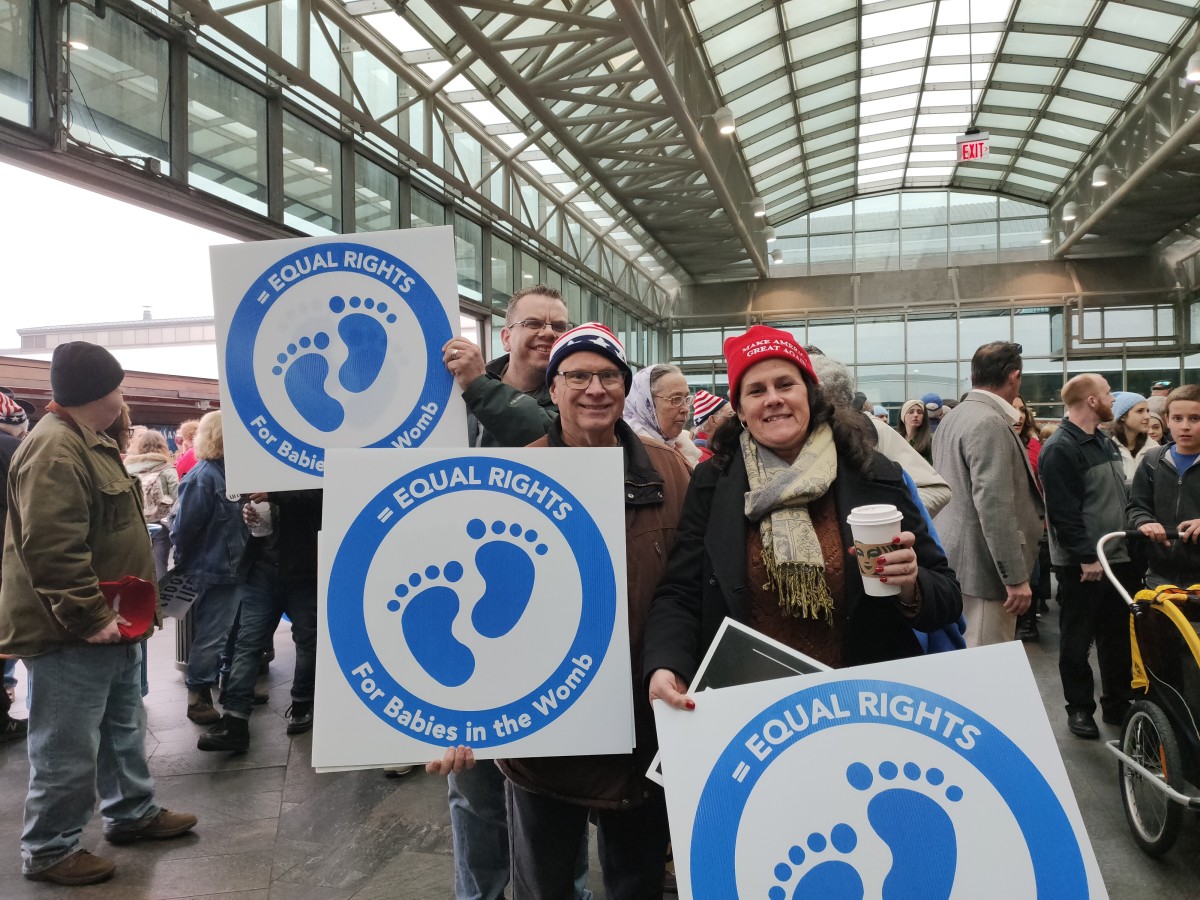
She was against abortion, which in her day was a dangerous procedure. She felt that if men took responsibility for the pregnancies they caused women would not feel the need to get abortions.
In her publication The Revolution, was written:
"Guilty? Yes. No matter what the motive, love of ease, or a desire to save from suffering the unborn innocent, the woman is awfully guilty who commits the deed. It will burden her conscience in life, it will burden her soul in death; But oh, thrice guilty is he who drove her to the desperation which impelled her to the crime!"
Abortion
was referred to as "child murder."
The Revolution, 4(1):4 July 8, 1869
"We
want prevention, not merely punishment. We must reach the root of the evil...It
is practiced by those whose inmost souls revolt from the dreadful deed."
The Revolution, 4(1): 4 July 8, 1869
"All
the articles on this subject that I have read have been from men. They denounce
women as alone guilty, and never include man in any plans for the remedy."
The Revolution, 4(1): 4 July 8, 1869
Susan died in 1906 of heart disease and pneumonia and was buried at Mount Hope Cemetery In Rochester.
© 2010 Don A. Hoglund